Show and Tell ideas for every letter, A to Z
Pick an item, practice one sentence, print a worksheet: everything for letter-of-the-week Show and Tell, free for parents, teachers, and homeschoolers.
ShowAndTellLetter gives parents and teachers free show and tell ideas for every letter A to Z. Each letter guide includes 20+ classroom-friendly items, hands-on crafts, phonics songs, STEM activities, printable worksheets, and tips for shy speakers — everything a preschooler or kindergartener needs for a confident classroom presentation.
Explore Every Letter A to Z
Click any letter to discover show and tell items, crafts, songs, and printable worksheets.
- A🍎Explore →
- B🎈Explore →
- C🐱Explore →
- D🦕Explore →
- E🐘Explore →
- F🐸Explore →
- G🦒Explore →
- H🚁Explore →
- I🍦Explore →
- J🕹️Explore →
- K🪁Explore →
- L🦁Explore →
- M🐵Explore →
- N🪺Explore →
- O🐙Explore →
- P🐧Explore →
- Q👑Explore →
- R🤖Explore →
- S🐚Explore →
- T🐢Explore →
- U☂️Explore →
- V🌋Explore →
- W🐋Explore →
- X🎼Explore →
- Y🪀Explore →
- Z🦓Explore →
How to prepare for Show and Tell in 4 steps
Our guides are designed to make Show and Tell day fun, educational, and stress-free — for both kids and parents.
Find Your Letter
Browse our complete A–Z guide and pick the letter of the week.
Choose Your Item
Pick from 20+ show and tell ideas for each letter, each with a speaking tip.
Prepare Together
Do a craft, sing a song, print a worksheet — make learning stick!
Present with Confidence
Use our parent tips to coach your child for a memorable presentation.
Crafts & Activities
3+ hands-on crafts per letter
Phonics Songs
A growing set of original songs, plus a YouTube song pick for every letter
Free Printables
Tracing, worksheets & activities
Speaking Tips
A tip for every item and a sentence to practice
Songs, printables, sounds & more
Jump straight to what you need — from phonics songs to free printables.
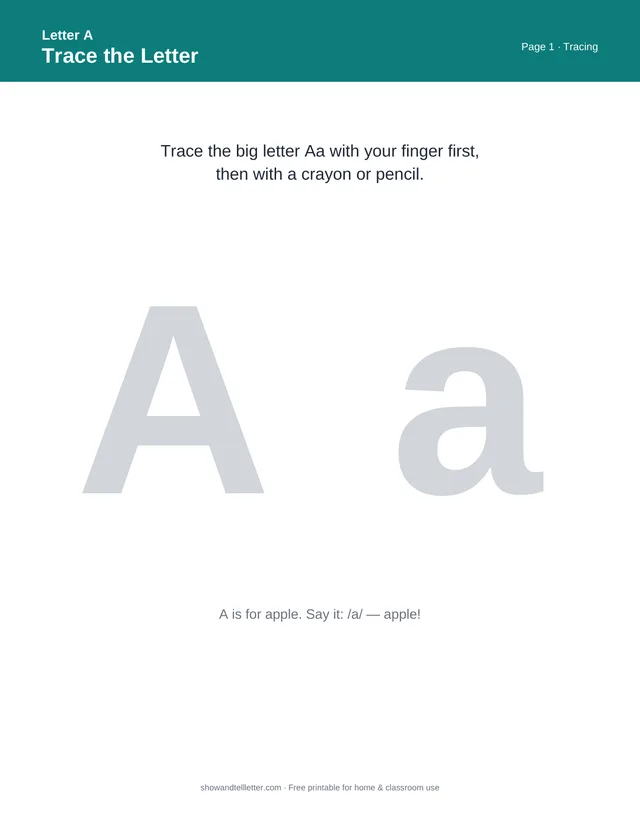
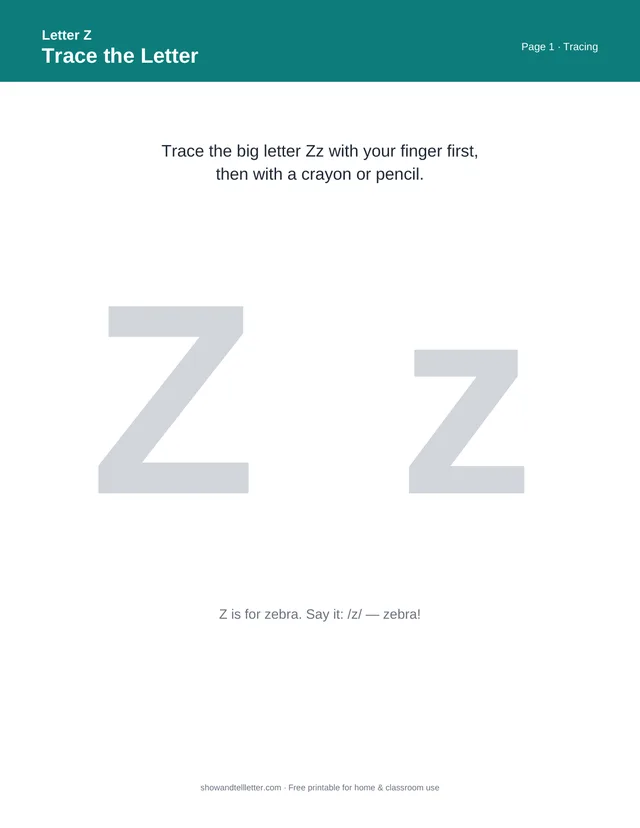
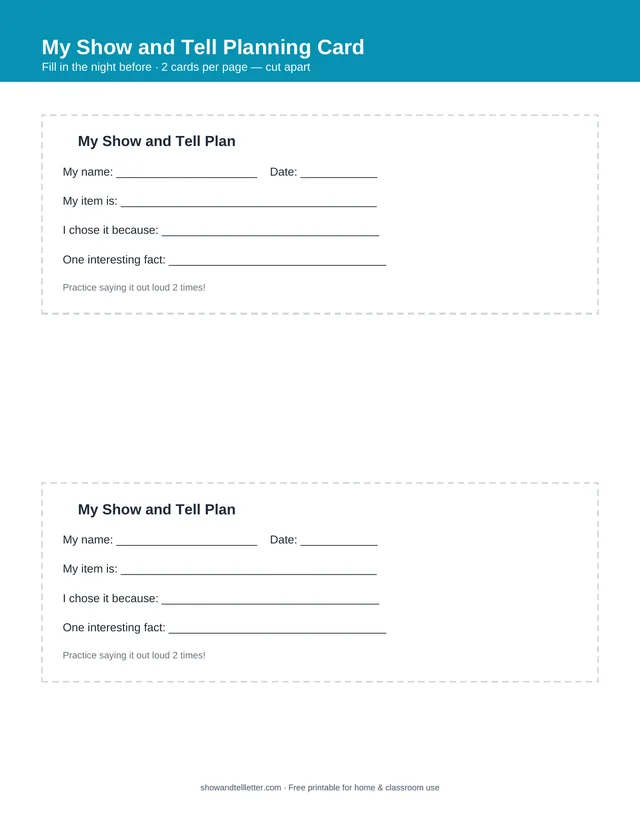
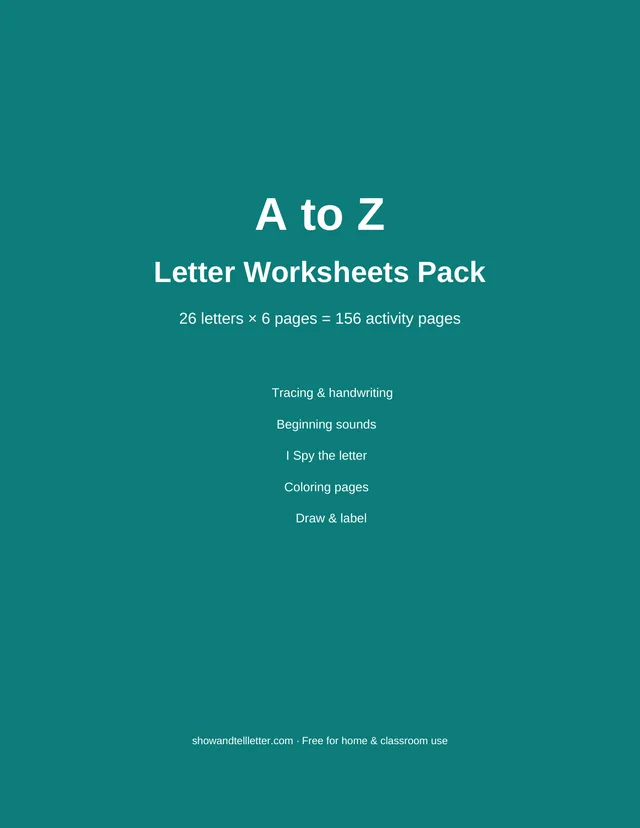
Real pages from the free worksheets
What you see is what you print — every letter's worksheet opens with a big tracing page like these. Download and print, no sign-up.
Start With a Sample Letter Guide
See what every guide includes: items, crafts, songs, and a printable worksheet.
Letter A
Got an apple, an avocado, or a toy airplane at home? Letter A makes Show and Tell surprisingly easy.
Letter S
A seashell from the beach, a sunflower from the yard — letter S turns everyday finds into classroom gold.
Letter P
Penguins, pinecones, and puppets are just the beginning — letter P has more Show and Tell ideas than you'd expect.
Letter D
Roaring dinosaurs, banging drums, and daring ducks — Letter D show and tell ideas for a loud, proud week.
Letter L
Five L things already in your house, the words your child can say about each, and a two-minute mirror trick for the L sound.
Letter R
Robots, rainbows, and rockets — Letter R show and tell ideas that are pure classroom gold.
Phonics Songs: Originals + a Song Pick for Every Letter
Short, simple tunes your child will actually remember — and want to sing again.
Every letter comes with hand-picked songs and videos built around everyday words your child already knows — and a growing set of letters have our own AI-generated original songs, with more on the way. You don't need to be a singer — just play it on the car ride to school or hum along at the breakfast table. The goal isn't a perfect performance; it's helping kids build a natural connection between a letter and its sound. Repetition makes it click, and these songs make repetition fun.
🎵 Explore All Phonics SongsFrom the Blog
Short, practical guides for the night before Show and Tell.
50 Last-Minute Show and Tell Ideas (Grab and Go!)
Show and Tell is tomorrow and you just found out? No stress! Here are 50 last-minute Show and Tell ideas already in your home — sorted by room, ready in minutes.
Read more →Show and Tell for Shy Kids: 15 Gentle Strategies That Actually Work
Is your child nervous about Show and Tell? These 15 gentle strategies help shy and anxious kids feel prepared and confident — without pressure or overwhelm.
Read more →Why Show and Tell is Important for Child Development
Why do schools use Show and Tell? This guide explains how a simple five-minute classroom activity builds public speaking, vocabulary, confidence, listening skills, and social-emotional growth in young children.
Read more →Frequently Asked Questions
New to Show & Tell? Start here. Answers to common questions about Show and Tell.
What is Show and Tell, and why do schools use it?
Show and Tell is a classroom activity where students bring an object from home, share it with the class, and practice speaking in front of a group. Most K–2 teachers use it to build early public speaking confidence, strengthen vocabulary, and give kids a warm, low-stakes way to connect classroom learning with their home lives.
What age or grade level is this site designed for?
ShowAndTellLetter is designed for ages 3–8 — preschool through second grade, when letter-of-the-week Show and Tell is most common. Teachers of older beginners often find the phonics resources useful too.
How do I help a shy or quiet child prepare for show and tell?
Start small at home — have them practice showing their item to you, a sibling, or even a favorite stuffed animal. Let them say just one sentence: "This is my ___ and I love it because ___." Choosing an item they already feel excited about makes a huge difference. The more familiar the item feels, the easier it is to talk about it in front of the class.
What if we don't have many toys or objects at home?
Show and Tell doesn't require anything fancy. A rock from the backyard, a library book, a drawing your child made, or a favorite kitchen item can work perfectly. Our A–Z idea lists always include a mix of everyday household objects alongside toys, so you'll almost always find something you already own.
How far in advance should we prepare for show and tell?
Even the night before is plenty of time. If you can spare 10–15 minutes, you can pick an item, talk through what your child wants to say, and do one quick practice run. Try our free printable Show and Tell planning card to make the conversation even easier.
Are these show and tell ideas classroom-friendly?
The ideas on this site are designed with real classroom expectations in mind — simple, appropriate, and easy to talk about. That said, every teacher has slightly different guidelines, so it's always a good idea to check your child's school newsletter or ask the teacher if you're unsure about a specific item.
Can I use your printables in my classroom?
Yes! All of our free printables are available for personal and classroom use. You're welcome to print and share them with students and parents at no charge. We just ask that you don't resell them or redistribute them digitally without linking back to the site.
What if my child refuses to participate in show and tell at all?
It happens, and it's okay. Most teachers are understanding when a child needs more time to warm up. Keep it positive at home — never force a practice session if it turns into a meltdown. Try again another day with a different item, or let your child watch you do a pretend Show and Tell first to see how easy and fun it can be.